A helpful technique in reflecting on a passage from the Bible is understanding what the opposite of the text looks like and see the contrast. Scripture already supplies such examples as Psalm 1:1-2, Proverbs 8:10 and Romans 8:6.
In this episode, we apply this technique to Philippians 4:8. The apostle Paul supplies a number of things to think on as a Christian. Setting up a list of the opposites places Paul’s actual text in much sharper focus. It helps us to build up our mindset in Christ (the Greek word “phronema” points to this. It is an important part of Eastern Orthodox theology). It is an approach from which we can greatly benefit.
Are you a secret Christian? An answer in the 21st century and an answer in 17th century England would be different. Rather than trying to prevent others from knowing you are a believer in Christ, in the 17th century, a believer carried on three types of spiritual duties (Public – Fellowship with large numbers; Private – Fellowship with smaller numbers of persons; Secret – The spiritual duties/activities carried on by oneself in solitude.
This episode reviews these and looks to encourage us in the “secret duties”, not so much as to check off a spiritual activity list but with the mindset of taking time to commune with Christ and find rest for our souls.
Ideas have implications. Statements in the Bible have implications as well.
In this episode, Hebrews 1:3 is examined alongside Luke 2:8-9 (as well as references to Ezekiel 10). Christ is said to be the radiance of the glory of God. On the night of His birth, shepherds encountered the glory of the Lord. Was Christ specially present to the shepherds as the glory of the Lord while, as a fully human baby, He laid in a manger in nearby Bethlehem?
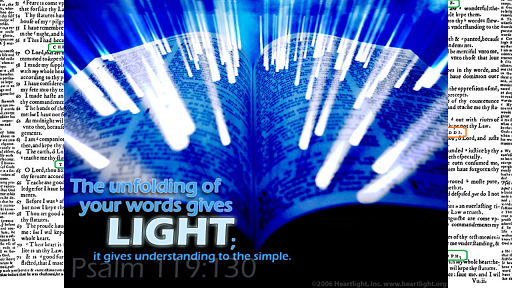
Two verses from Psalm 119 point to a supernatural, spiritual light from the Bible. Verse 130 is examined in detail using a technique from the 17th century British minister Thomas Manton.
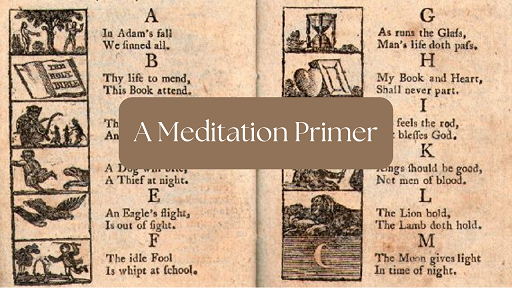
We will learn to take in Scripture (by reading or listening), meditate/reflect on it and offer these up in prayer for others and ourselves.
Data visualization created by Chris Harrison that displays the 63,779 cross-references in the Bible – Photograph: Christoph Römhild and Chris Harrison.